
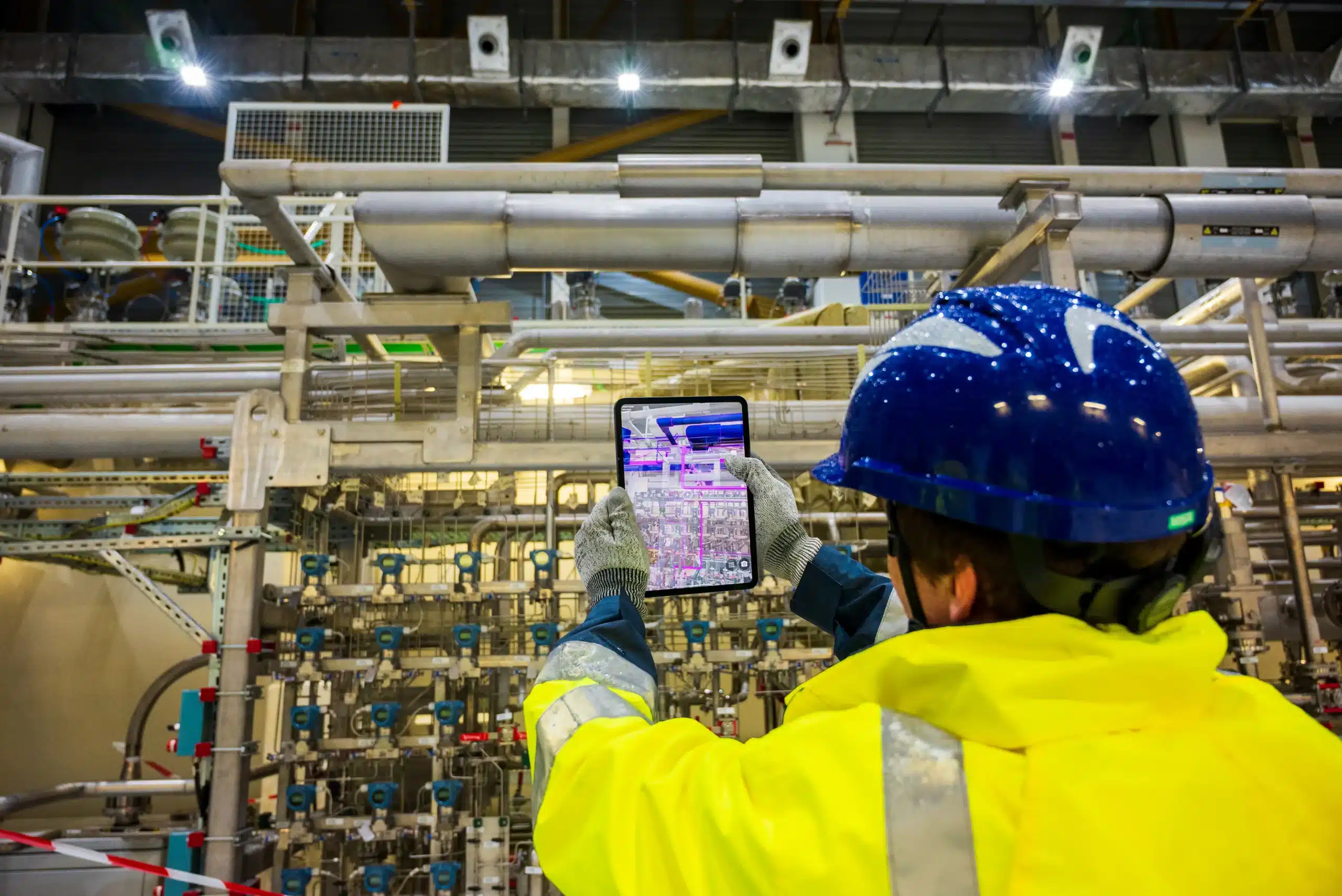
GAMMA AR at ITER
The reality on the ground
For most projects, reporting progress on site today is a very manual process that requires experience and effort to get right, and is typically reported with rough estimations or counts of installed units. The results therefore range from imprecise guesstimates to precise but labor-intensive reports – which are disconnected from other data in the project. Reality capture solutions – most commonly 360-degree photo documentation – are being used to tackle this problem, but they lack detail and can’t capture all completion according to the requirements of the project. Laser scanning offers more geometric precision, but is too costly to repeat at the frequency progress tracking requires. These solutions also depend on offsite, computer- and AI-assisted processing that still needs human intervention – a service model with a price tag that limits their use to only the most complex projects such as data centers or pharmaceutical plants which have the necessary budgets. This situation renders classical reality capture solutions unattainable for most projects and therefore excludes them from the further technological or economic possibilities resulting from gaining access to structured and precise progress data.
Using Augmented Reality-based technologies to track progress directly on site gives projects advanced progress tracking capabilities at a fraction of the cost (there is no scanning hardware to buy and no offsite processing service to pay for) and in a much more decentralized way, by actually giving the progress tracking task to the field teams who are in any case accountable for reporting the completion of their own work.
Simplicity enables mass adoption
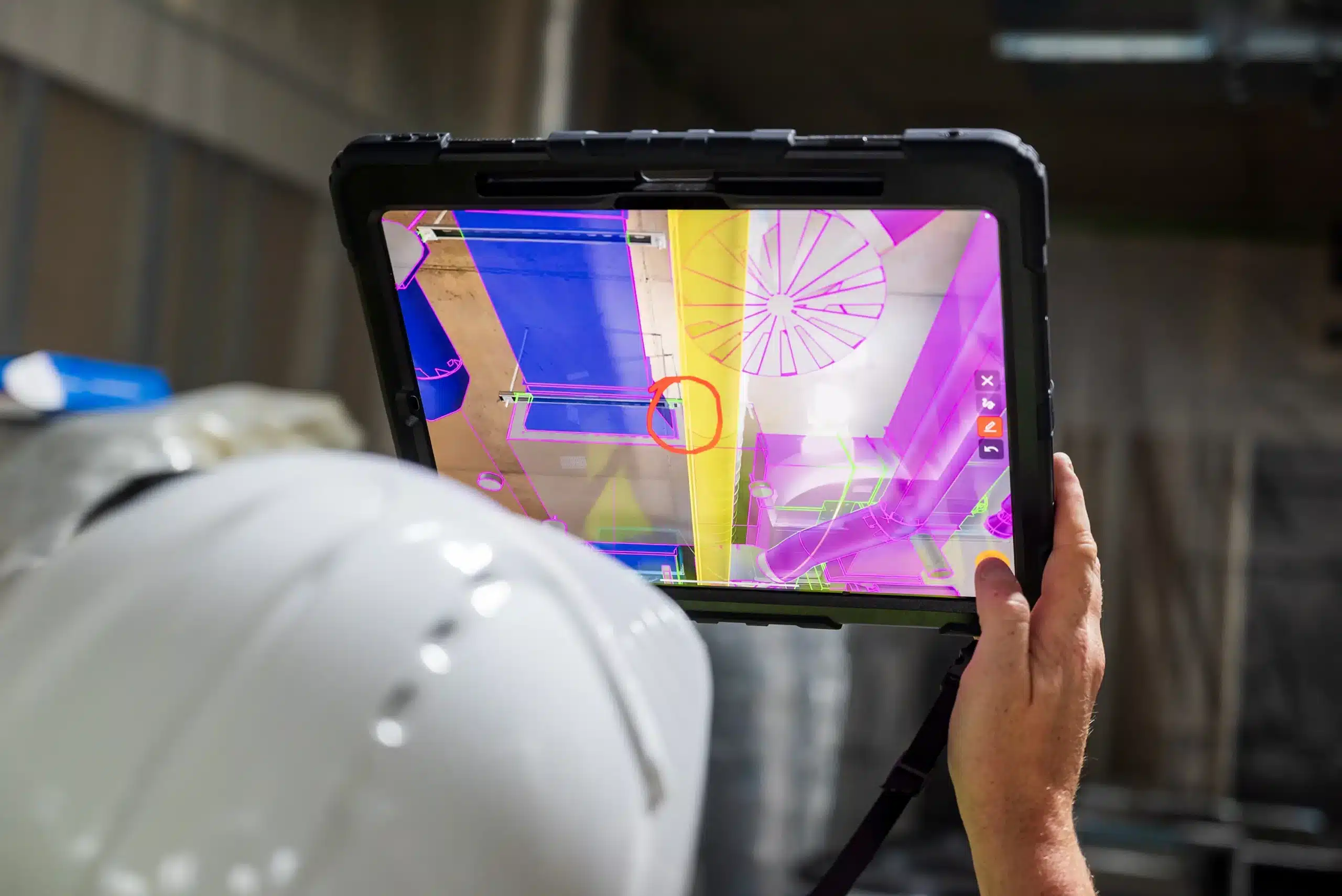
GAMMA AR on a construction project from Kane Group in the UK
The ability to use Augmented Reality with overlaid BIM models on the other hand provides another, very efficient way with low entry barriers and low operational costs compared to reality capture solutions. Compared to traditional progress tracking methods that rely on manual counting and calculating masses and amounts, AR is also faster and cheaper: instead of walking the site with drawings and transferring counts into spreadsheets, a foreman confirms completion on the overlaid model during a regular site walk, and quantities are calculated automatically from the BIM objects.
Here, AR systems track progress on site using BIM models by relying on user input and validation directly on the jobsite. The human operating the system brings in multiple sources of information to define the stage of completion, not just visual and not limited to a finite number of cases handled by the software.
Interestingly, in a time when the world stares at AI to resolve all our problems, AR does something totally against the Zeitgeist. It enables humans and by doing that achieves far more than current technical solutions could. Humans see the situation with a wealth of context, sensory information and experience, combined with knowledge that AI systems simply lack (today), leading to better results.
Superintendents and foremen who use augmented reality in their projects overlay the design models or shop drawings/models onto the site and combine all information they have to decide about the actual stage of completion.
Since the object information is tracked using BIM models, the tracked progress ensures calculations are according to the specific requirements of each discipline. In-situ concrete parts can be tracked by volume. Pre-fab parts by count and so on. The progress reporting therefore can be associated with the contractually agreed deliverables.
The information in the BIM models therefore plays a crucial role in defining what degree of precision or tracking is achievable.
Not all BIM models are created equal
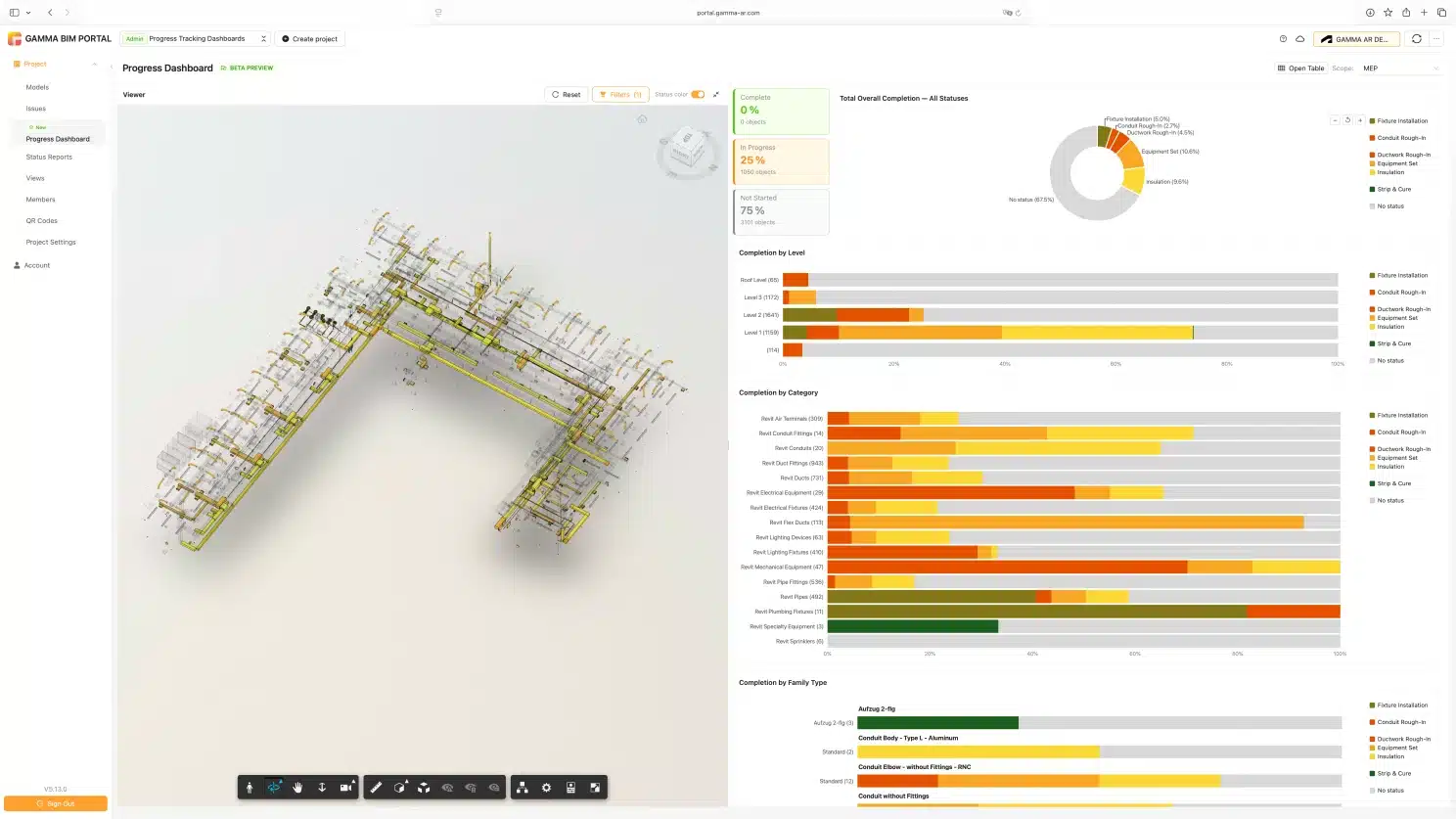
GAMMA AR's Progress Tracking Dashboards
Here is where the different qualities and purposes of the models make a difference. When we classify BIM models by their potential for progress tracking we would come up with something like this:
Depending on the grade of the model, we can therefore track completion at different levels of detail and report as precisely as technically possible.
For design stage models, estimations of percentages are broken down to component level giving a better completion overview and making it verifiable.
For an estimation stage model, deliverables can be tracked and reported in a structure that matches the contract and therefore are useful for quantity/cost reconciliation.
And for Construction grade or shop drawing/shop models, the results of the progress tracking can be matched with the contractual deliverables but also can be used for structuring the construction execution in a much more detailed manner, e.g. managing material deliveries based on installed quantities.
The best practices for progress tracking with AR
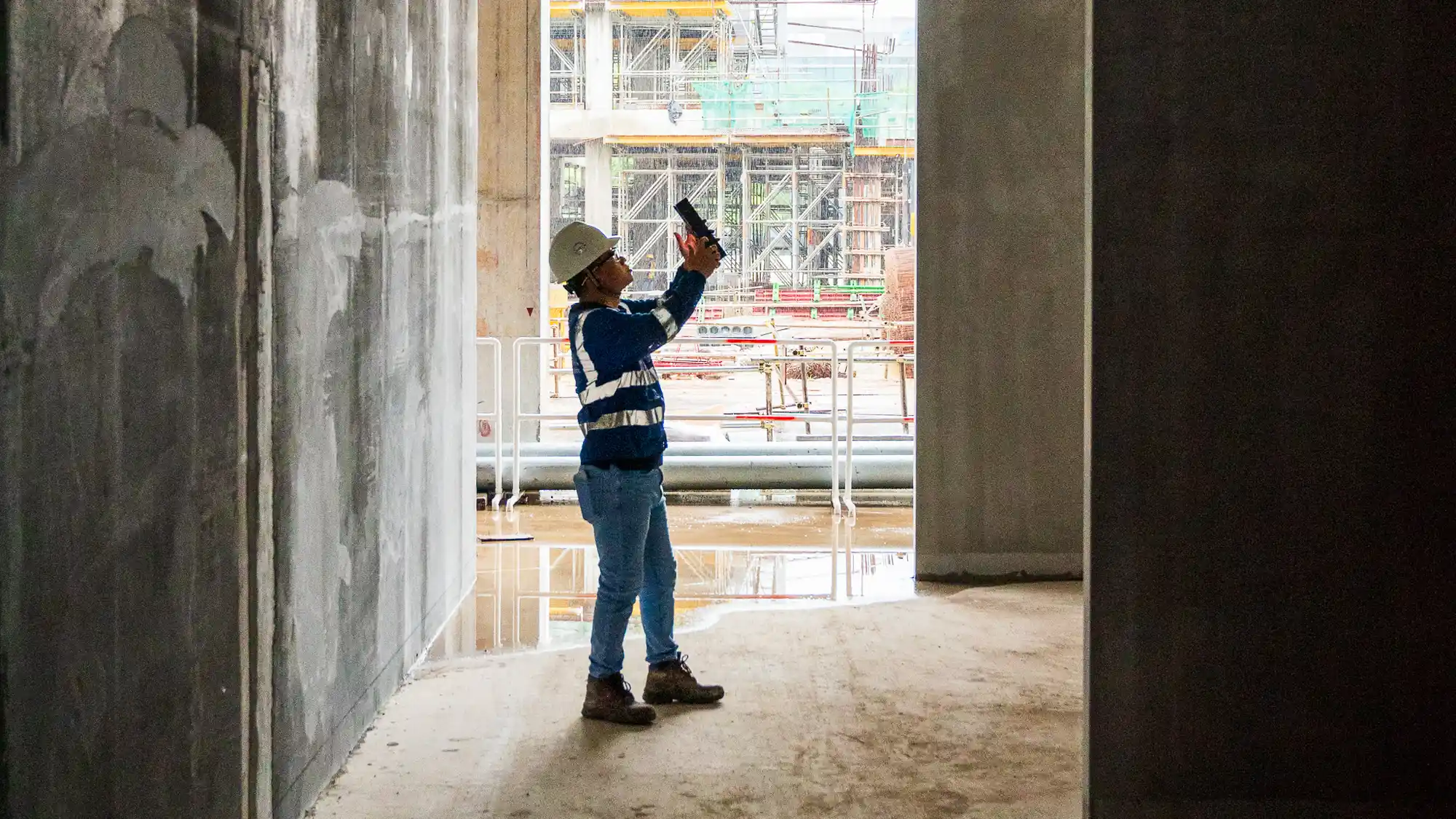
GAMMA AR on a Boustead Project in Singapore
When tracking progress in AR, it is important to define clear roles and tasks to ensure accountability. Compared to reality capture solutions where a third party is responsible for providing progress data, in AR, the task is done in a decentralized way and in line with accountabilities. Foremen report their work and Superintendents sign off. Delivery and Control are built into the workflow. No third party is involved and therefore deliverables are much better discussed and inconsistencies can be identified early on . E.g.: If a foreman marks a section complete but the superintendent spots missing hangers in the overlay during sign-off, the discrepancy is caught and resolved instead of escalating weeks later in a dispute. This ensures that progress is not only reported but the workflow also becomes a tool to coordinate the execution in detail.
The incentive structures themselves drive the adoption: because every party on site gets something it needs from the same progress data, AR-based progress tracking becomes not only a requirement, but a pull factor that drives construction optimization.
Want to discuss how to implement GAMMA AR for Progress Tracking?
Our team at GAMMA AR is very happy to discuss how to implement construction sequencing, progress tracking QA/QC, and on-site coordination in your projects. Reach out to us, we are happy to find the best process for your specific needs.