
Case Study
Al-Fanar: When VDC has got the Fields Back

Company type
Industry sector
Project type
Entertainment Complex Construction
Executive Summary
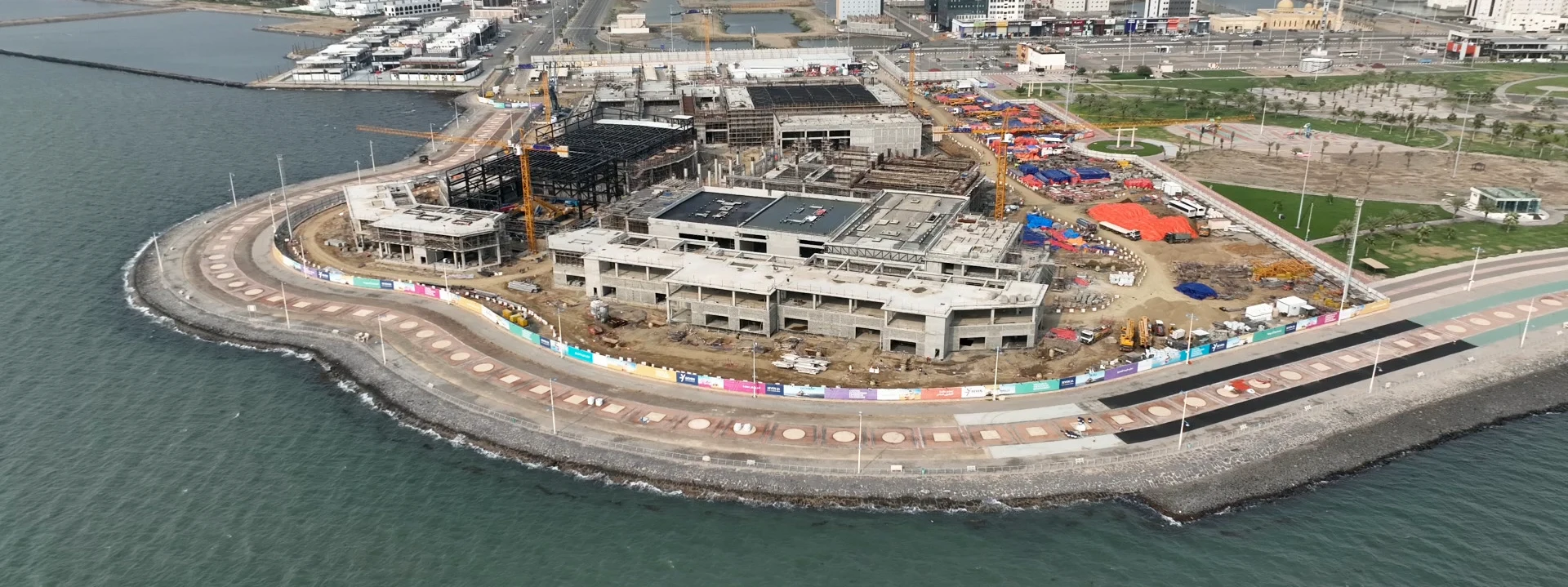
Alfanar Projects is a Saudi-rooted global engineering and construction conglomerate founded in 1976, delivering large-scale energy, water, and infrastructure projects across 28,000+ employees worldwide. Working for Saudi Entertainment Ventures (Seven), Alfanar is building the Jazan Entertainment Complex. Al-Fanar has been entrusted with the full scope of engineering, procurement, and construction (EPC) for the entertainment destination on Jazan’s North Corniche, with Saudi Entertainment Ventures (SEVEN) investing 1.3 billion Riyal. The complex occupies 73,000 m² of built-up area across eleven buildings on Jazan’s waterfront. The project also has high requirements on ESG targets with active efforts on carbon accounting, resource efficiency, worker welfare, and certified systems. In addition to the already high goals, the project’s scale and fast-paced nature required the implementation of augmented-reality-based construction execution technologies to ensure that budgets and schedules stayed within the contractual frame.
Challenges
This project's characteristics created many tricky challenges for the project teams: Due to concurrent design and construction, bi-weekly updates of the 210 models in the project brought constant shop drawing changes requiring frequent on-site constructibility checks and constant coordination on the field to avoid damages and rework. Conflicts needed to be ruled out and handled as early as possible, requiring a detection mechanism on site. Major sequencing issues between MEP trades meant tearing out and redoing work already done. Unapproved designs were executed, leading to additional costs and delays.
The Solution & Implementation


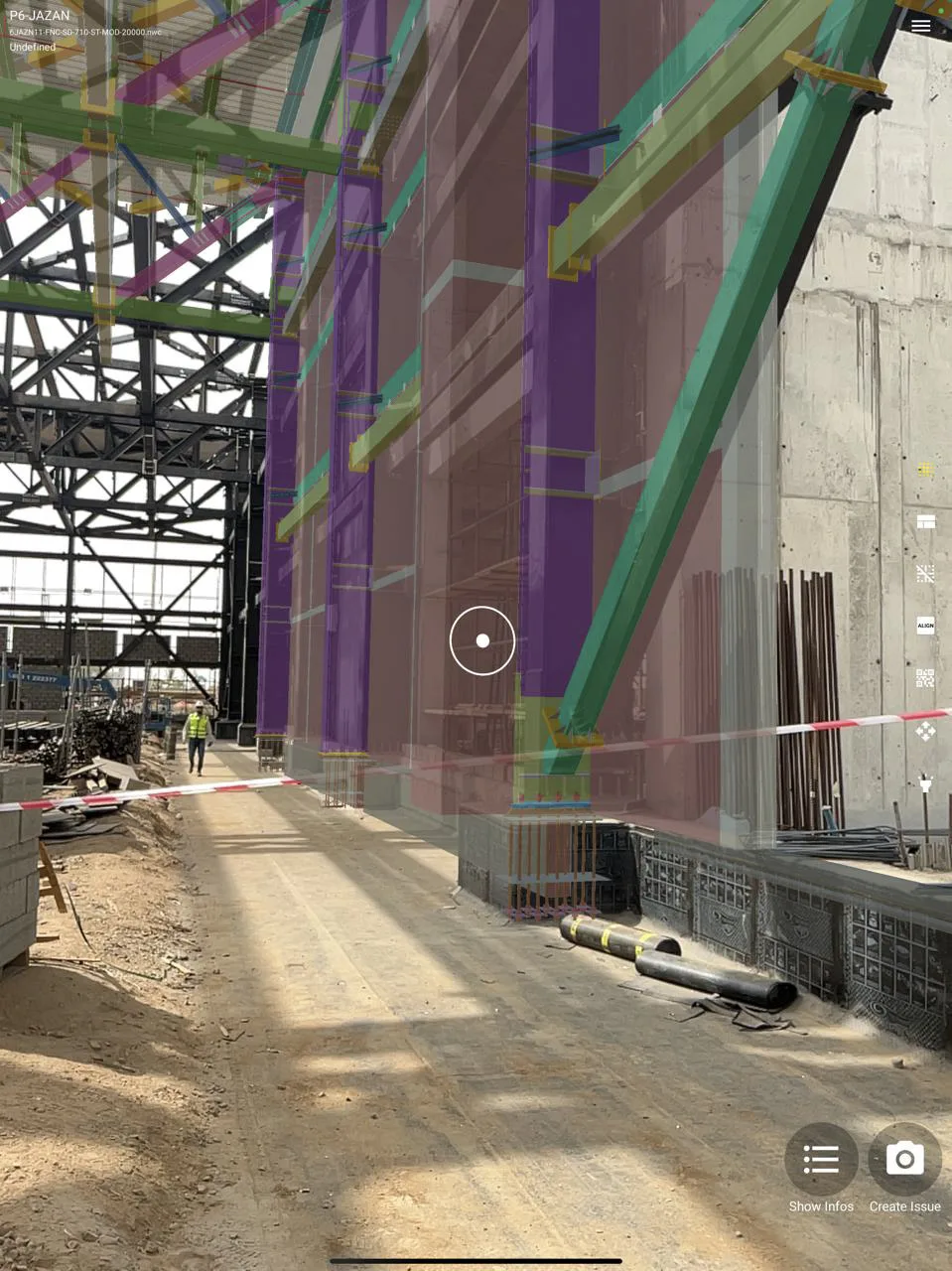
For many of those challenges, the only potential solution lies in the application of augmented reality on the actual construction site. Using GAMMA AR, the team was able to address their needs in detail: Very frequent model updates were handled by linking the shop drawing models developed by the engineering team at Advanced Consultancy Center (ACC) between Autodesk Forma (Autodesk Construction Cloud) and GAMMA AR, so unknown changes in the most recent construction models could be surfaced to building crews and compared against already-built conditions on site.
Potential clashes in active construction could be detected through the AR comparison on site and reported to the project management and superintendents for priority treatment.
Superintendents and foremen could consult the federated models to plan detailed sequencing of installations. Examples include incorrect installation sequences for ducts and cable trays that were caught early or prevented. In addition, the exact execution of the design on site benefited from the use of GAMMA AR. Using GAMMA, the teams could identify deviations from the design intent such as the exact construction of parapets.
The importance of implementation and VDC teams having the fields back
A key factor where Walid Elsibai and his team showed great performance was the strategic and diligent implementation of GAMMA AR on site. The team integrated GAMMA AR into their daily workflows with a strong level of control over all typical friction points. To reduce barriers for positioning, Walid instructed surveyors to place QR codes on columns. This provided a baseline of curated positioning checkpoints that the crews could rely on, if the field teams ever had troubles. To ensure consistent usage, Walid prepared extensive guides for all field users and implemented monthly courses to help new users to onboard as well as help existing users to refresh their knowledge. The dedication paid off and ensured strong field-team performance, resulting in a reduction of costs and delays.


Where Designs and Construction converge
Due to the concurrent design and construction, the models needed to be tightly woven in into the daily work of the General Contractor or Subcontractor. GAMMA AR helped here to preview the work on site, tackling conflicts and incomplete execution upfront, such as missing or misplaced sleeves in concrete. Additionally, the integrated workflow with Autodesk Forma also helped to streamline corrective measures and ensure quick turnaround with the designers on the project. Issues on site, such as clashes, were detected, flagged with component precision, and assigned to the designers, who would then update their models shortly with the resolved situation on site. Walid estimates reductions of issues by 20%, saving costs and cutting avoidable work hours.

Conclusion
Al-Fanar's work on the Jazan Entertainment Complex shows what happens when VDC teams take ownership of field enablement. A project of this scale and pace, 73,000 m², eleven buildings, 210 models updated bi-weekly under concurrent design and construction, left no room for coordination gaps between the model and the site. GAMMA AR closed that gap by putting the up to date federated model in the hands of foremen and crews, catching clashes, sequencing errors, and design deviations before they became rework. Walid's disciplined rollout, QR checkpoints, written guides, monthly training, is what turned the technology into a daily workflow, delivering an estimated 20% reduction in site issues. When VDC has the field's back, design and construction stop competing and start converging.

About Walid Elsibai
Walid Elsibai is a BIM & Digital Delivery Manager renowned for leading BIM implementation on landmark infrastructure, residential, and mega-entertainment projects worth over 45 billion SAR. Certified by BSI in ISO 19650 and holding a PMP credential, he is an expert in implementing BIM methodologies and strategies across all project stages, from design and construction to management and operation. He is highly skilled in planning and managing field teams to deliver precise As-Built models using Laser Scanning (Scan-to-BIM) workflows. He specializes in orchestrating the full BIM lifecycle and bridging design engineering with advanced site technologies. He is an Autodesk Certified Instructor and the first certified instructor from GAMMA AR, pioneering the use of augmented reality for QA/QC and on-site validation.
Among his standout contributions to the BIM asset tracking and facilities management (FM) sector is his development of "BIM PAT Gen". It stands as the world’s first free dedicated tool that streamlines the crucial project handover stage. By transforming asset registers into automated QR codes and barcodes, the tool bridges the gap between digital models and physical site assets. He is also the author of “Fundamentals of BIM & GIS.”