
Removing Sequencing Issues from Construction
Why Augmented Reality is the antidote to removing one of the most frequent problems.
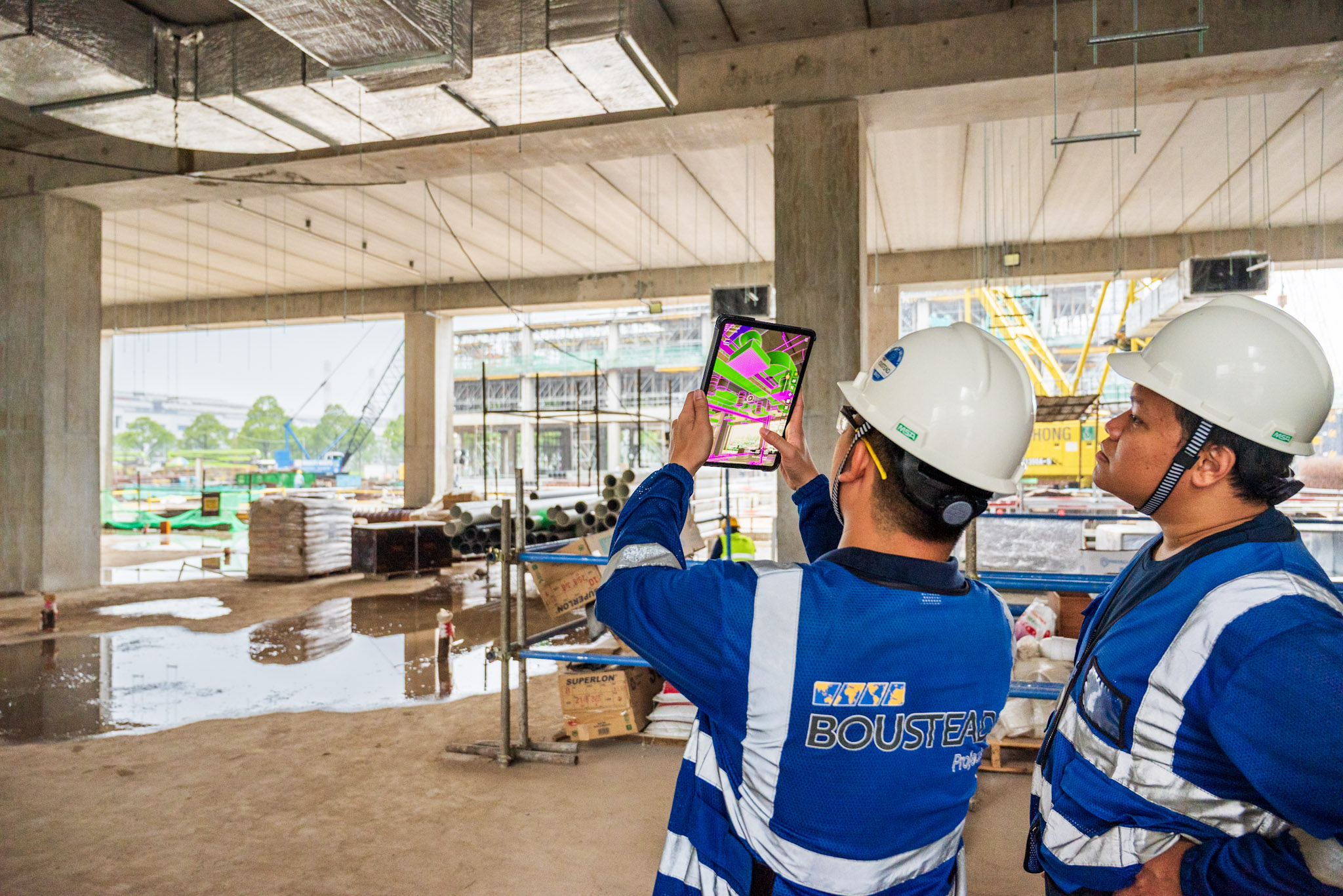
Sequencing issues are hurting us all
We all have seen it: The electrician ran the conduits already, the duct crew arrives and the conduits are in the way. Someone has to move or potentially redo the finished work, adding costs and potentially delaying even the project.
This failure to coordinate installation priorities between all trades is known to all of us and our experience shows its frequency and the gravity of its occurrences depending on how late the sequencing issues were uncovered. The scale is not trivial: industry analyses place MEP-related clashes at over 60% of all coordination conflicts on a typical commercial project, with rework consuming as much as 5–15% of total project cost – and the cost of each conflict multiplying the later it surfaces.
Tackling this situation should therefore be one of the most important areas of action for technology.
Prospective Job Coordination beats Retrospective Reaction
Today, countless solutions try to tackle the problem by detecting sequencing issues that have occurred as early as possible. Reality capture like scanning solutions or 360-degree technologies are a common solution to a part of this problem. They are employed by someone (or something) walking the site, recording footage and days later providing an overview of walkthrough and potentially showing what diverged from the plan. The capabilities of these solutions are conceptually limited to a reactive approach: they can only look back into the past and therefore can only attempt to detect the mistakes as early as possible, but never before that. Additionally, their price point limits those solutions to only very complex jobs, leaving it out of reach for most construction projects.
A 4D coordination of the BIM Models can help to reduce major issues resulting from sequencing, but updating the schedules to constantly match the site, renders this problem uneconomical and comes with increased workload for the BIM teams and additional cost. And finally, many issues just happen on site and a prior 4D mapping of the schedule to the construction site can never match the actual realities on site.
Augmented Reality is conceptually different and provides forward looking and coordinative capabilities unbound from the technological and conceptual limitations governing reality capture technologies. The prospective nature of the technology allows the superintendents and foremen on site to coordinate and plan the execution directly on the exact location on site and make decisions that avoid sequencing issues directly.
The surprisingly simple way AR prevents sequencing problems
Jobsite conditions change daily and unexpected issues can always arise. The field teams have the best overview of the realities on the ground. So, it is best, if detailed sequencing decisions are handled by defining priorities for the upcoming works in the actual space with all information in front of their eyes.
The coordination of the sequencing on site is straightforward with AR and does only require following a few steps:
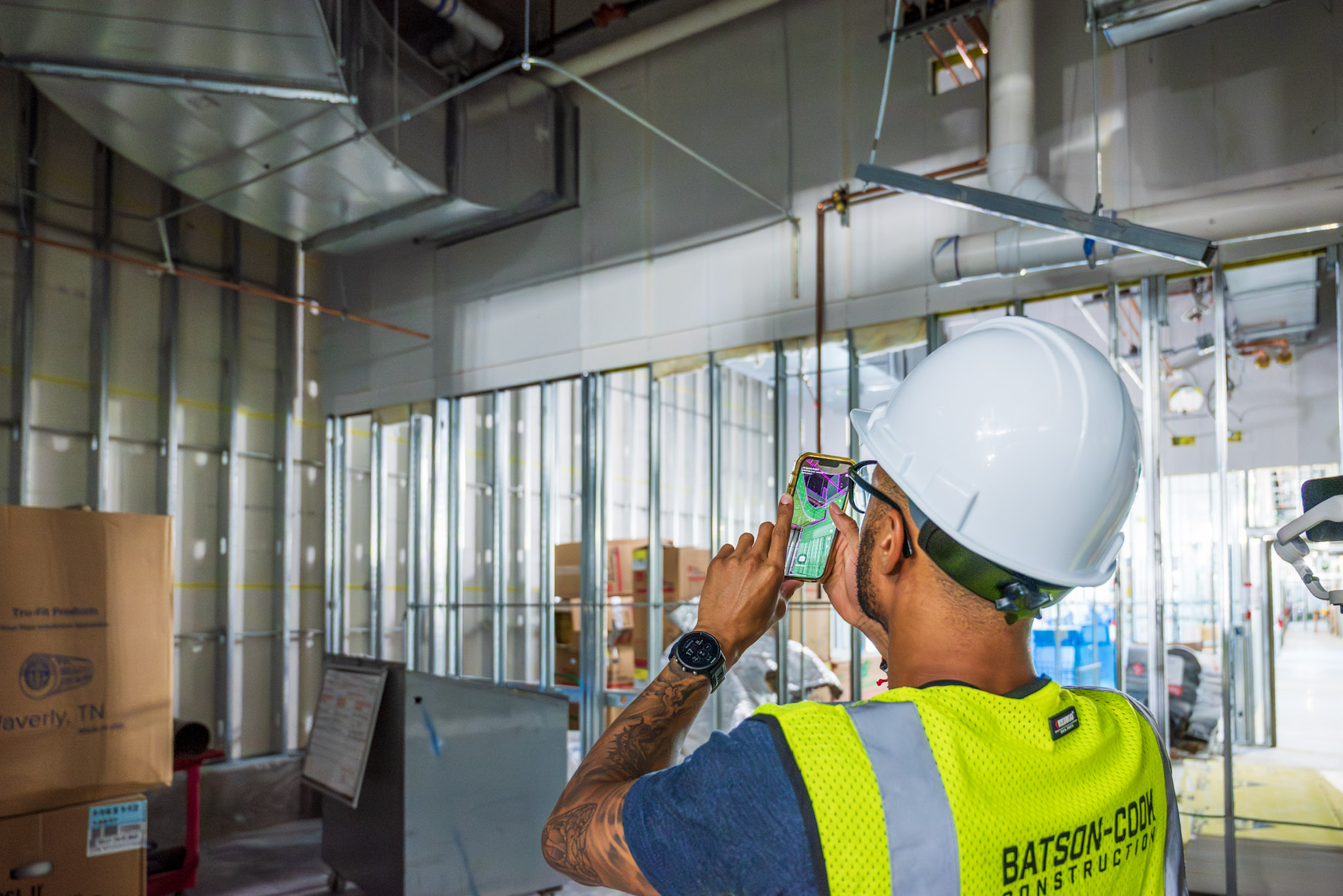
This process avoids the execution of works in a wrong sequence and is deliberately kept lightweight and only tracks agreed upon priorities for each component in the BIM model and their completion. Unnecessary back and forth to the office is avoided. Documentation and reporting tasks are focused on supporting the actual execution.
This process is solution oriented and not bureaucratic. The opposite of administering a rigid schedule. It is real-time coordination owned by the people with boots on the ground.
Because each completion is captured against specific components in the model, project management gets informed about which trades are now unblocked and what gets installed next. Resource needs surface earlier, and stalled areas become visible the moment progress stops.
The logical next step
Reality capture solutions have been around for a while and have been helpful for tracking what has actually been installed. GAMMA AR extends those capabilities with on-site coordination and prospective sequencing, putting them in the hands of the people doing the job on the ground.
Want to discuss how to implement GAMMA AR for Sequencing?
Our team at GAMMA AR is very happy to discuss how to implement construction sequencing, progress tracking QA/QC, and on-site coordination in your projects. Reach out to us, we are happy to find the best process for your specific needs.